Showing posts with label Peugeot. Show all posts

Carros de História: Peugeot 206

Em 1998, foi lançado o 206, o sucessor do 205.
O 206 foi o Peugeot mais vendido de todos os tempos
O 206 foi lançado originalmente como um hatchback com motores 1.1, 1.4 e 1.6 a gasolina e um motor diesel de 1.9, e uma versão HDi com injeção common rail, vindo mais tarde. Em 1999, um motor GTI 2 litros capaz de chegar a 210 km/h, bem como uma versão ajustada do GTI chamada de Peugeot 206 RC (ou Peugeot 180 GTI no Reino Unido), foram adicionados ao intervalo. Ele fez de 0-100 km/h em 7.5s e atingia uma velocidade máxima de 220 km/h com 180 cv. Em 2001, mais duas versões do 206 foram lançadas - a 206 CC (Coupé Cabriolet), com um telhado de aço dobráveis ​​e o 206 SW (206 em versão perua). A versão sedan de 4 portas foi revelada no final de 2005, e está disponível, no mercado do Norte da África, China, Irã, e Estados Unidos.

O 206 é principalmente fabricado nas fábricas de Mulhouse, embora o carro também é produzido na cidade iraniana de Khodro. O 206 também foi montado no Chile para os mercados mexicanos e colombianos (o 206 francês era mais barato do que os chilenos). A produção brasileira começou em Porto Real e no Rio de Janeiro, em 2001, seguido pela versão SW que chegou em 2005. A produção brasileira possuía motores 1.0 16V, 1.4 8V e 1.6 16V, os dois últimos motores eram flex-fuel (gasolina/álcool). A linha de produção no Irã  também produz um único modelo, o 206 SD, também conhecido como o 206 Sedan, que é um sedã de 4 portas.
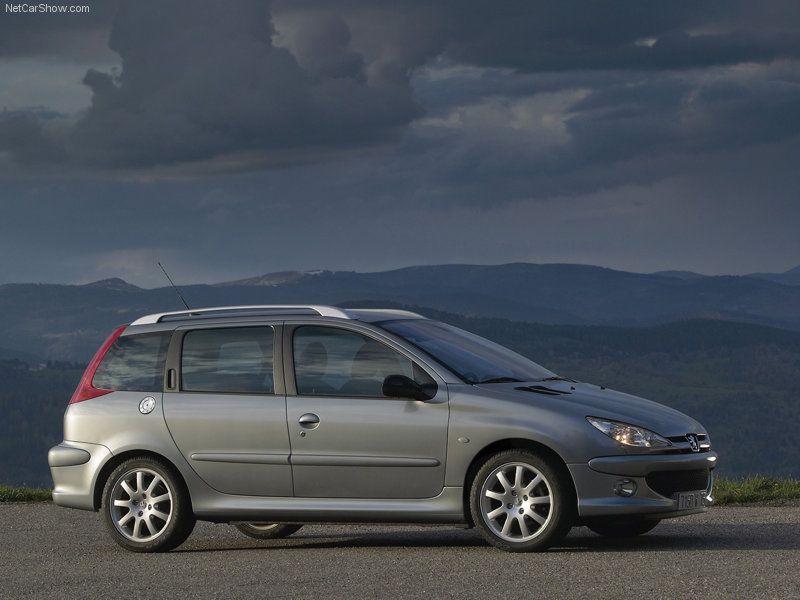
Em 2001, a Peugeot mostrou o 206 SW Concept...
...cujo em 2003, foi lançado em vários países...
...e chegou aqui no Brasil em 2005.
Em 2003, fo lançado em vários mercados, a versão perua do 206, chamada em todo o mundo como 206 SW. Em 2001, a Peugeot apresentou em Genebra o 206 SW Concept (idêntico as fotos acima), e como dito antes, foi lançado em 2004. O carro tinha motores 1.1, 1.4 e 1.6 nos EUA, Irã, França, Chile e na África. Aqui no Brasil, o 206 SW chegou apenas em 2005 e, em 2006, ganhou a versão Escapade, uma versão aventureira, para concorrer com Fiat Palio Adventure e Volkswagen Parati Track & Field. A primeira versão especial da família 206 aqui no Brasil foi a 206 HDi, que tinha pintura especial Peugeot "Azul Neysha".
No mesmo ano, em 2003, foi lançado o 206 CC (Coupé Cabriolet)
E esta é a cor tão famosa da Peugeot, a Azul Neysha

No mesmo ano, em 2003, a Peugeot aumentou a família do 206, com a chegada do 206 CC (Coupé Cabriolet), uma versão conversível/cupê do 206. O carro continha as mesmas motorizações do 206 no Brasil, 1.0, 1.4 e 1.6 em todo o mundo. O 206 CC hoje, aqui no Brasil, tem um preço um pouco mais barato do que a de 2003, que hoje custa quase R$ 70 mil. Aqui no Brasil, não tem 207 CC, mas como lá fora, o 207 é outro, lá tem versão CC do 207.
Em 2005, foi lançado em vários países, o Peugeot 206 Sedan, como linha 2006.
O carro continua em linha nos EUA e no Irã, mas nunca chegou ao Brasil
A traseira é quase igual a do sucessor, o 207 Passion
O painel é igual ao do hatchback, mas tem um tom mais preto
Partindo de uma série que teve uma produção de mais de 5 milhões de unidades, o 206 Sedan reforça ainda mais a versatilidade de reconhecer a linha 206, que em suas diferentes versões agora representa uma família ainda mais reforçada.

A silhueta em quinto na família 206, o 206 SD, é ao mesmo tempo moderno, elegante e versátil, e foi desenhado pelo Centro de Estilo Peugeot.

Destina-se a uma vasta gama de clientes que enfatizam a importância da imagem, escolhendo um carro com apelo visual moderno​​, mas também são exigentes em termos de atributos funcionais consideráveis ​​oferecidos pelo sedã 206, um veículo com quatro portas e uma bota.

Equipado a partir de seu lançamento com uma especificação mecânica comprovada em termos de motores, transmissões e suspensão, mas, adaptados aos diferentes mercados em que é vendido, esse 206 Sedan é também generoso em termos de comodidade e equipamentos de segurança.

Em 2009, a Peugeot lançou o 206 Plus (206+).
Na Europa, ele é o sucessor do 206, enquanto aqui no Brasil é o mesmo carro da foto, só que chamado de 207.
Traseira igualzinha a do 207
O painel ganhou um retoque mais moderno comparado ao do 206
A Peugeot, uma jogadora importante no segmento de carros pequenos e médios, expandiu a sua gama com o Peugeot 206 Plus (206+), o descendente de quase 6,5 milhões Peugeot 206 produzidos desde 1998. Este veículo, com os códigos genéticos de renome no mundo inteiro, arredonda a gama da marca do leão em pé.

A "entrada da gama de produtos"
O Peugeot 206 Plus é, portanto, uma "faixa de entrada" do produto, em linha com as expectativas dos clientes: um carro de referência moderno, e acima de tudo acessível a tantas pessoas quanto possível, sem comprometer seu apelo. O seu interior foi concebido com cuidado, com um "olhar de ondas" novo painel de instrumentos e toques decorativos que lembram o mundo do motociclismo.

Seu estilo é decididamente moderno, inspirado no 207. Um capô novo, uma nova grelha e novos faróis para destacar esta personalidade forte.

Família 207 Brasil: 207 HB, 207 SW, 207 SW Escapade, 207 Passion e 207 Hoggar (207 Pick-up)
Este é o 207 Passion (207 Sedan), ele é como se fosse o 206 Sedan reestilizado.
Esta é a versão Escapade do 207 SW, que, se colocar a dianteira do 206, viraria um 206 Escapade.
Em 2009, foi lançada a família 207 Brasil, que não tinha a proposta de substituir a família 206. Mas no começo de 2010, o 206, enfim, foi substituido pela família 207, que hoje já vende muito bem. O único país em que o 206 continua em linha é os EUA, que ainda tem o 206 Sedan em linha.

Peugeot 3008

Peugeot has launched the new 3008, the company's first crossover. Previewed by the Prologue concept unveiled at the 2008 Paris Motor Show, and nearly identical in its overall aesthetic, the 3008 is positioned at the crossroads between SUVs, MPVs and traditional hatchbacks, and will be the French automaker's first vehicle to offer a hybrid powertrain.

The design of the production 3008 is virtually identical to the concept's, though the new car makes do with smaller wheels, a metal roof rather than an all-glass canopy, and the reptilian skin graft at the rear has been removed. Peugeot claims its non-conformist approach offers an original solution and optimal versatility to customers in search of modernity, practicality and driving pleasure.

Inside, the car appears to be an inviting and driver-oriented environment, with a center stack angled towards the driver. The upmarket interior aims to attract the same kind of buyers drawn to Nissan's highly successful short-wheelbase Qashqai. New technologies such as dynamic roll and grip control are claimed to enable the vehicle to blend a higher driving position with engaging driving characteristics and environmental efficiency.

Source:

Cardesignnews

Peugeot RC HYmotion4 Four-Door Coupe Hybrid Concept Gets 52MPG

Peugeot RC HYmotion4 Concept HybridAmong the most impressive eco-friendly concept cars that made their debut by the dozens in Paris was the awkwardly named Peugeot RC HYmotion4. The innovative and rather sensual hybrid four-door coupe combines a rear-mounted, 1.6-liter turbocharged gasoline engine (based on the same unit used in the Peugeot 207 RC and MINI Cooper) developing 218HP that powers the rear-wheels with a front-mounted 95HP electric motor that drives the front-wheels for an overall output of 313HP. -Continued

The electric motor is powered by lithium batteries which are recharged during both deceleration and braking. Unlike most other hybrid systems, the front and the rear power units in the Peugeot are not connected mechanically. Instead, the hybrid drivetrain is controlled automatically by electronics. According to the French automaker, the RC HYmotion4 can be driven either in electric or petrol engine mode only, or with both engines combined making possible a maximum output of 313HP.

Peugeot RC HYmotion4 Concept HybridPeugeot claims that the four-seater sedan can sprint from zero to 100 km/h (62mph) in a mere 4.4 sec, to 1,000m (0.62 miles) in 22.8 sec and on to a top speed of 295 km/h (183mph). And if that isn’t enough to warm you up, Peugeot says that the 4.716 meter long RC HYmotion4 consumes on average just 4.5 lt of fuel for every 100 km which translates to 52.3 mpg US.

Maybe sometime in the near future Peugeot will finally decide to make a premium sedan like the RC HYmotion4 that people will be interested in buying instead of wasting its time and money with ill-fated proposals like the 605 and 607.


Peugeot RC HYmotion4 Concept Hybrid

Peugeot RC HYmotion4 Concept Hybrid


Peugeot RC HYmotion4 Concept Hybrid


Peugeot RC HYmotion4 Concept Hybrid

Source: carscoop

Peugeit RC HYmotion4

The RC Hymotion4hybrid can run in fully-electric mode. Peugeot promises a potential maximum power output of 318bhp, yet carbon dioxide emissions of just 109g/km on the combined cycle.According to Peugeot it is a ‘Touring Car Coupe’ that features a number of engineering and technological ideas expected to make their way into the carmaker’s future production models.Weight is a key factor in the dynamic and environmental efficiency of any vehicle. The RC HYmotion4 has therefore been designed to optimise this parameter. Its structure thus comprises a "space-frame" type aluminium body ensuring overall lightness and rigidity, to which are fi tted the mechanical assemblies and the suspension. Inside the Peugeot RC HYmotion4 concept are four individual seats. The predominantly black interior is subtly highlighted with blue lighting and trim element s.

Technology

It features a 1.6-litre THP petrol engine with a power output of 160kW (218bhp) located at the rear of the vehicle, combined with a 70kW (95bhp) electric motor under the bonnet.The end result is a maximum power of 230 kW (313 bhp), ensuring high levels of driving pleasure, combined with CO2 emissions in the combined cycle of only 109 g/km, or zero in electric only drive mode. Another

major innovation made possible by the design is the vehicle's four-wheel drive system, which directly benefi ts road holding and therefore safety.Despite this efficiency, the RC Hymotion4 is claimed to be able to accelerate from 0-100km/h in just 4.4 seconds and move from 80-120km/h in 3.0 seconds flat.

Peugeot 308 RC Z concept

These are the first pictures of the Peugeot 308 RC Z concept car, scheduled to make an appearance at the upcoming Frankfurt Motor Show. Based on the forthcoming 308, the 308 RC Z is a 2+2 coupe - in the same ilk as Audi's TT. The construction focuses on lightweight, employing aluminum in the roll over protection bars, a polycarbonate rear windscreen and carbon fiber body panels.

Design details of the dramatic concept include pronounced wheel-arches that blend seamlessly with the aggressive front fascia and a stepped beltline. The large offset between the door and rocker panel emphasizes the purposeful, sporting stance. The two curves in the carbon fiber roof are both aerodynamically efficient and an interesting style element. The doors raise the visual profile, creating a link between the sloping front design and the curvaceous rear design.

Inside, chrome and aluminum feature throughout, including brushed eyelets on the front seats and on the door panels. Black lacquered fittings and leather seating surfaces also create an upmarket impression. The fascia panel of the concept car has been taken directly from the hatchback. Fluid in form, its sloping design complements the vehicle's large front windscreen and brightens the cabin, improving visibility and adding a feeling of space.

Source: cardesignnews

Peugeot 207SW

Peugeot have just announced the 207SW - Station Wagon - variant of the 207 that was launched last year in Geneva. At 4156mm long it is 119 mm longer that the standard 207 hatchback with which it share all parts forward of the B-pillar, the added length all being in the rear overhang.

The design theme apes that of the larger 407SW in the way the DLO extends into a mini rear quarter light in a reverse angle C-pillar that the rear screen also folds around. The car innovates in this class with a separate opening tailgate glass and also has a unique three-section parcel shelf allowing access to the trunk from the rear seats, tailgate glass or when the whole tailgate is opened.

In Europe, the core market for the 207SW, estate cars are rare in the small car sector accounting for less than 4 percent of sales, but the 206SW that the 207SW replaces was the best selling estate in France and the new car is expected to sell at the rate of 100,000 per year. The Renault Clio Grand Tour Concept shown in Geneva earlier this year suggests that soon Peugeot will have added competition.

Related Stories:
Peugeot 207 - Geneva 2006
Renault Clio Grand Tour Concept - Geneva 2007
cardesignnews

Peugeot 308

These are the first pictures of the forthcoming Peugeot 308 that replaces the 307. The car will compete predominantly in the lower medium European C-sector along with the Opel Astra, Ford Focus, the class leading Volkswagen Golf, and its PSA sibling: the Citroen C4.

The 308 is expected to make its public debut at the Frankfurt Motor Show in September and be available at launch in 3 and 5 door hatchback body styles with other variants including an estate to follow.

The design builds on the tall proportions established by its predecessor and some of the features that the 207 introduced as well as appearing to have been influenced by some Mercedes designs.

Little information about the car has been released yet, but we expect the car has increased in length significantly as the 207 did over the 206, and to have been designed particularly to appeal to the German market where the most successful C-sector cars originate.

Related Stories:
Designer Interview: Jerome Gallix, Co-Director Peugeot Design
cardesignnews

Peugeot 207 SW Outdoor concept


Peugeot will lift the wraps off what will be the wagon variant of the popular 207 at the Geneva Motor Show next month. Described as 'an illustration of what could be a future model dedicated to leisure and dynamism', the 207 SW Outdoor concept also reveals the look of the Peugeot's repost to rivals such as the VW CrossPolo in its extra cladding and raised stance. Features include a panoramic glass sunroof, a split-opening rear hatch and the use of parachute fabric inside.

Other cars on the Peugeot stand this year include the 4007 SUV making its debut, and the 175PS 207 GTI awaiting comparisons to its illustrious ancestor, the 205. For those who managed to miss it in Paris, Peugeot will be showing the 908 RC concept again.

Related stories:
Peugeot 908 RC concept - Paris 2006
cardesignnews

Peugeot 207CC

Following the 207 Epure concept shown at the Paris Motor Show, Peugeot has revealed the production version, the 207CC - though without the concept's fuel-cell powertrain. Succeeding the popular 206CC launched in 2001, the 207CC obviously doesn't differ much from the show car, which was the first model touched by Co-Director Peugeot Design Jerome Gallix.

Replacing the fuel cell is a range of IC engines; two gas and one diesel. All three motors have 16 valves and 1600cc, the diesel producing 110PS and the turbos of the two gasoline options tuned for either 120PS or 150PS. Key dimensions for the Peugeot 207CC are: length 4037mm, width 1750mm, height 1397mm. The wheelbase is 2540mm, and roof up trunk capacity is 449 liters dropping to 187 liters when lowered. Sales begin in March with prices to be announced nearer the time.

Related Stories:
Designer Interview: Jerome Gallix
cardesignnews

Peugeot 4007 and Citroen C-Crosser

PSA has entered the SUV market with the Peugeot 4007 and Citroen C-Crosser models. The vehicles, a result of the co-operation between PSA Peugeot Citroen and Mitsubishi Motors Corporation - aside from the face - retain most of the features of Mitsubishi's current Outlander.

The 4007 was styled at Peugeot's design centre in Velizy in France. Peugeot claim a "distinctive and feline design style" to the 4007. It is aggressive, with its tapered headlights and open front grille, to claim its face is feline seems tenuous.

Upon first appearance, Citroen's C-Crosser appears more successful. Taking its name from the four-wheel drive concept car that Citroen first displayed at the 2001 Frankfurt Motor Show, the new C-Crosser manages to be both robust and elegant. Dominant chevrons stretch across the bonnet from the streamlined front headlamps, a face consistent with the Citroen range. The multiple-ribbed hood, chunky wheel arches, chrome detailing and sleek window lines further enhance the C-Crosser.

Both vehicles use the new 2.2-litre HDi direct common-rail injection diesel engine (a result of PSA's partnership with Ford) offering 156 bhp, (115 kW) and 280 lb ft (380 Nm) of torque, and are capable of using a 30% mixture of diesel biofuel, without any modifications.

Related Stories:
Citroen C-Crosser concept - Frankfurt 2001
cardesignnews

Peugeot 207 Epure concept


Eight years ago, the Peugeot 20Heart show car previewed the 206CC, which brought folding metal roofs to the masses. Since then, Opel has re-released the Tigra, while Nissan has retorted with the Micra CC in the mini-cabrio stakes. Accordingly, Peugeot will update their range with the 207CC, previewed here as the 207 Epure that will be displayed at the Paris Motor Show.

Painted white, the show car also aims to reflect ecological credentials: powering it is a hydrogen fuel cell-based engine, technology speculated by Peugeot in their ATV concepts at the 2004 Paris Motor Show. Other than that and the revised rear, the Peugeot 207 Epure remains similar to the hatchback on which it is based, ready to evolve into the 207CC for Q2 sales next year.
Source: cardesignnews